Nigeria’s telecom sector is currently facing one of its most disruptive moments in recent years. Millions of subscribers are experiencing call restrictions as major network providers aggressively recover outstanding airtime and data debts.
Operators including MTN, Airtel, Glo, and 9mobile have reportedly recovered over ₦2 trillion from subscribers, following a nationwide crackdown triggered by new regulatory compliance requirements.
But beyond the numbers, the real story is how this sudden shift is affecting everyday Nigerians who rely heavily on mobile connectivity for business, communication, and survival.
📉 What Triggered the Airtime Borrowing Crackdown?
The disruption began after telecom operators were unable to fully comply with updated regulations introduced by the Federal Competition and Consumer Protection Commission (FCCPC).
These regulations extended oversight to digital lending services, including airtime and data borrowing platforms.
Faced with compliance risks and potential penalties, telecom companies made a strategic decision to:
- Suspend airtime and data borrowing services
- Initiate aggressive debt recovery processes
- Restrict services for users with outstanding balances
- You may not be able to make calls if you owe airtime
- Your line could remain restricted until full repayment
- Partial payments may not restore access immediately
- Traders are losing customers due to unreachable phone lines
- Students are struggling to access online learning resources
- Small business owners are missing daily sales opportunities
- The market is worth over ₦400 billion annually
- Millions depend on it for short-term financial flexibility
- It supports informal businesses and daily transactions
- Borrowing services remain largely unavailable
- Call restrictions are still active in many cases
- Full restoration has not yet been achieved
- Buy data at significantly cheaper rates
- Avoid service disruptions caused by borrowing restrictions
- Access multiple networks in one place
- Even earn money by reselling data
- Regulatory clarity from the FCCPC
- Compliance adjustments by telecom operators
- Ongoing court decisions
- Have you been blocked from making calls?
- Do you think telcos handled this properly?
- Would you still use airtime borrowing if it returns?
This move immediately affected millions of prepaid subscribers across Nigeria.
📞 Why Are Calls Being Restricted?
With borrowing services still suspended, telecom providers have taken stricter measures by limiting outgoing calls for users who owe airtime or data credit.
This means:
For many users, this has created serious communication challenges.
💔 Real Impact on Nigerians
Across Nigeria, the effects are being felt in homes, markets, and small businesses.
For example:
In a digital economy where communication is critical, restricted access can directly impact income and livelihood.
📊 The Scale of Airtime Borrowing in Nigeria
Airtime and data borrowing services are not just convenience tools — they function as a form of microcredit for millions of Nigerians.
Industry estimates show:
This explains why the sudden suspension has caused widespread disruption.
⚖️ Legal Battles and Regulatory Tensions
The situation has been further complicated by ongoing legal disputes between telecom operators, service providers, and regulators.
A Federal High Court ruling recently ordered that certain service disruptions should be halted, particularly those affecting licensed value-added service providers.
However, despite these rulings:
This indicates a deeper regulatory standoff that has yet to be resolved.
🚨 Why This Matters More Than You Think
This situation highlights a major reality:
Relying on borrowed airtime or data is risky.
When policies change or services are suspended, users are left with limited options.
This is why more Nigerians are now looking for alternatives that give them full control over their connectivity.
💡 Smarter Alternative: Take Control of Your Data & Airtime
Instead of depending on borrowing services, many users are switching to platforms that offer cheaper and more reliable access.
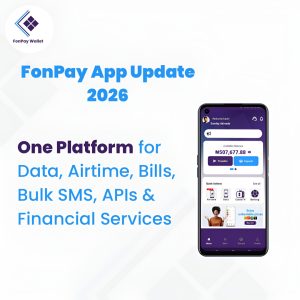
With FonPay, you can:
This approach removes the uncertainty associated with telecom credit services.
📈 What Happens Next?
The future of airtime borrowing in Nigeria depends on:
While there is hope for restoration, there is no confirmed timeline yet.
🧠 Final Thoughts
The recovery of over ₦2 trillion by telecom operators shows the massive scale of airtime borrowing in Nigeria — but it also exposes its vulnerability.
For users, the lesson is clear:
Depend less on borrowed services and move towards smarter, more stable solutions.
As Nigeria’s digital economy evolves, adaptability will be the key to staying connected and financially secure.
Start Buying Cheap Airtel Data Today
Join thousands of Nigerians using FonPay to save money on Airtel data.
💬 Join the Conversation
What has been your experience with airtime borrowing and call restrictions?
👉 Join the discussion on our forum and share your experience.
 Join FonPay WhatsApp Channel