Nigeria’s telecommunications industry continues to expand rapidly as mobile connectivity and internet usage reach new milestones in 2026. The latest report from the Nigerian Communications Commission (NCC) shows significant growth in both subscriber numbers and data consumption, reflecting the country’s ongoing digital transformation.
As more Nigerians rely on mobile internet for communication, business, entertainment, and financial transactions, the telecom sector has become one of the key drivers of economic and technological development in the country.
Subscriber Growth in Nigeria’s Telecom Sector
According to official NCC data, total active telecom subscriptions in Nigeria increased to 182.2 million in January 2026, up from 169.3 million recorded in January 2025.
This steady increase highlights the growing demand for mobile connectivity across urban and rural areas. It also reflects ongoing investments by network providers to expand coverage and improve service quality nationwide.
Teledensity, which measures the number of telephone connections per 100 inhabitants, also improved significantly. The figure rose to 84.06 percent in 2026, compared to 78.10 percent in the previous year.
This indicates deeper penetration of telecom services and increased access to mobile communication for Nigerians.
Market Share of Telecom Operators in Nigeria
The Nigerian telecom market remains highly competitive, with four major operators controlling the majority of subscriptions.
MTN Nigeria maintained its position as the market leader with 94.2 million subscribers, accounting for 51.78 percent of total subscriptions.
Airtel Nigeria followed with 62.04 million subscribers, representing 34.09 percent of the market.
Globacom recorded 22.46 million subscribers, while 9mobile accounted for 3.26 million users.
These figures show that MTN and Airtel continue to dominate Nigeria’s telecom landscape, while other operators maintain smaller but significant market shares.
Shift Toward Faster Internet Technologies
One of the most important trends in Nigeria telecom growth in 2026 is the increasing adoption of faster broadband technologies.
4G networks remain dominant, accounting for 53.41 percent of total connections, up from 47.23 percent in 2025.
At the same time, 5G adoption is gradually increasing, reaching 3.94 percent, compared to 2.54 percent in the previous year.
This shift reflects rising demand for faster internet speeds, driven by video streaming, online gaming, remote work, and digital business operations.
Meanwhile, older technologies are declining. 2G usage dropped to 36.97 percent, while 3G fell to 5.67 percent, showing a clear transition toward modern network infrastructure.
Internet Usage and Data Consumption in Nigeria
Internet subscriptions in Nigeria also experienced strong growth, increasing to 151.6 million users in January 2026, up from 141.7 million in 2025.
Even more impressive is the surge in data consumption. Total data usage rose significantly to 1,385,536.04 terabytes, compared to 1,000,930.60 terabytes recorded a year earlier.
This sharp increase highlights how Nigerians are consuming more data than ever before.
The growth is largely driven by:
- Video streaming platforms
- Social media usage
- Remote work and online education
- Digital payments and fintech services
- Improved access to fast internet services
- More opportunities for online businesses
- Better communication and connectivity
- Increased adoption of digital services
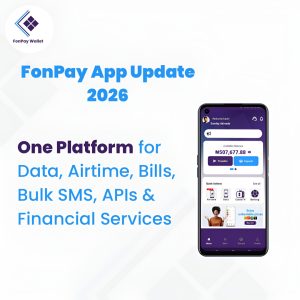
For users looking to manage these increasing data needs efficiently, platforms like
FonPay provide affordable and reliable data solutions across all major networks.
You can also explore our guide on
the best cheap data apps in Nigeria
to learn how to reduce your data costs while staying connected.
What This Growth Means for Nigerians
The continued expansion of Nigeria’s telecom sector brings several benefits to individuals and businesses.
However, it also means that managing data expenses has become more important than ever.
Conclusion
Nigeria telecom growth in 2026 reflects a strong shift toward a more connected and digital economy. With over 182 million subscribers and rapidly increasing data consumption, the demand for reliable and affordable internet services will continue to rise.
As the telecom industry evolves, users must adopt smarter ways to manage their connectivity costs while enjoying fast and stable internet access.
Start Your Data Reselling Business Today
Join thousands of Nigerians already earning daily income from data reselling using FonPay.
 Join FonPay WhatsApp Channel